

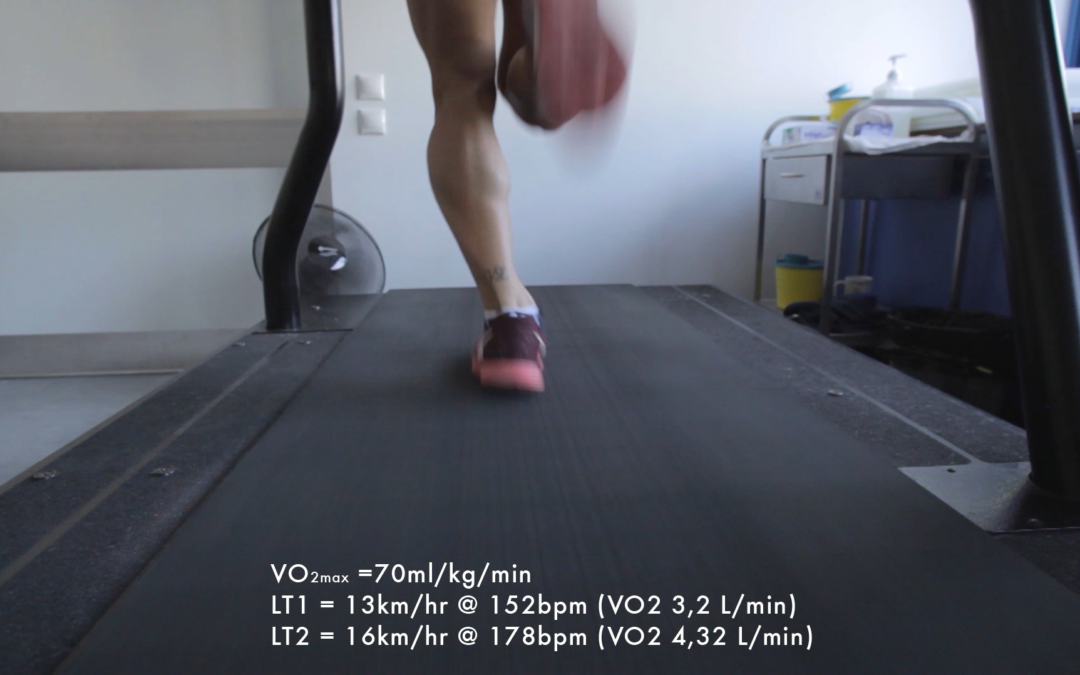
The Role of High-Intensity Training in Improving VO₂max
Maximal oxygen uptake (VO₂max) is one of the key indicators of cardiorespiratory fitness and a major determinant of endurance performance. While aerobic base training forms the foundation of preparation, further improvement of VO₂max requires the incorporation of high-intensity training.
In contrast to low- and moderate-intensity training, which primarily induces peripheral adaptations (such as mitochondrial function), high-intensity training promotes significant central adaptations, including:
- increased stroke volume
- improved cardiac output
- enhanced oxygen transport and utilization
Training intensity is a critical factor in improving VO₂max, as exercising at high percentages of maximal aerobic capacity leads to greater physiological adaptations compared to lower intensities.
At the same time, high-intensity interval training (HIIT) has been shown to be particularly effective, as it allows the athlete to accumulate more time near VO₂max, thereby maximizing the adaptive stimulus.
Furthermore, systematic reviews indicate that high-intensity training can produce greater improvements in VO₂max compared to traditional continuous endurance training, even with a lower overall training volume.
These findings highlight that intensity is an essential component for performance development, particularly after the aerobic base phase has been established.
How Speed Training is Applied in Runners
Based on scientific evidence, the development of speed and VO₂max is not achieved by increasing training volume, but through the targeted introduction of high-intensity training sessions.
For runners preparing for 6 km and 10 km races, such as the SNF Nostos Run, high-intensity training represents the bridge between aerobic capacity and race performance.
The practical application is based on the principle:
high intensity – controlled volume – adequate recovery
Main Training Methods
Interval Training (indicative)
- 6–10 × 400 m
- 4–6 × 800 m
- 3–5 × 1000 m
performed at intensities close to VO₂max
VO₂max Sessions (indicative)
- 3–5 × 3–4 minutes
- aimed at stimulating the cardiorespiratory system
Strides
- 6–8 × 80–100 m
- with emphasis on neuromuscular activation
Key Principles of Application
Speed training should:
- be performed 1–2 times per week
- be introduced after the development of the aerobic base
- be combined with adequate recovery
Integration into the Overall Training Process
High-intensity training:
- improves speed
- increases VO₂max
- enhances the ability to sustain high running pace
However, it is effective only when built upon a well-developed aerobic base.
Speed is not an isolated component of training, but the natural continuation of aerobic development. Proper integration of high-intensity work allows the runner to translate physiological capacity into improved race performance.
High intensity should not be applied indiscriminately.
The goal is not exhaustion, but maintaining an intensity level that allows for a high-quality training stimulus.
Therefore, through targeted training we expect specific adaptations, and fatigue, in itself, is not an indicator of progress in that direction.
Dimitris Theodorakakos
Sports Director @sportsexcellence
Sports Excellence Team